
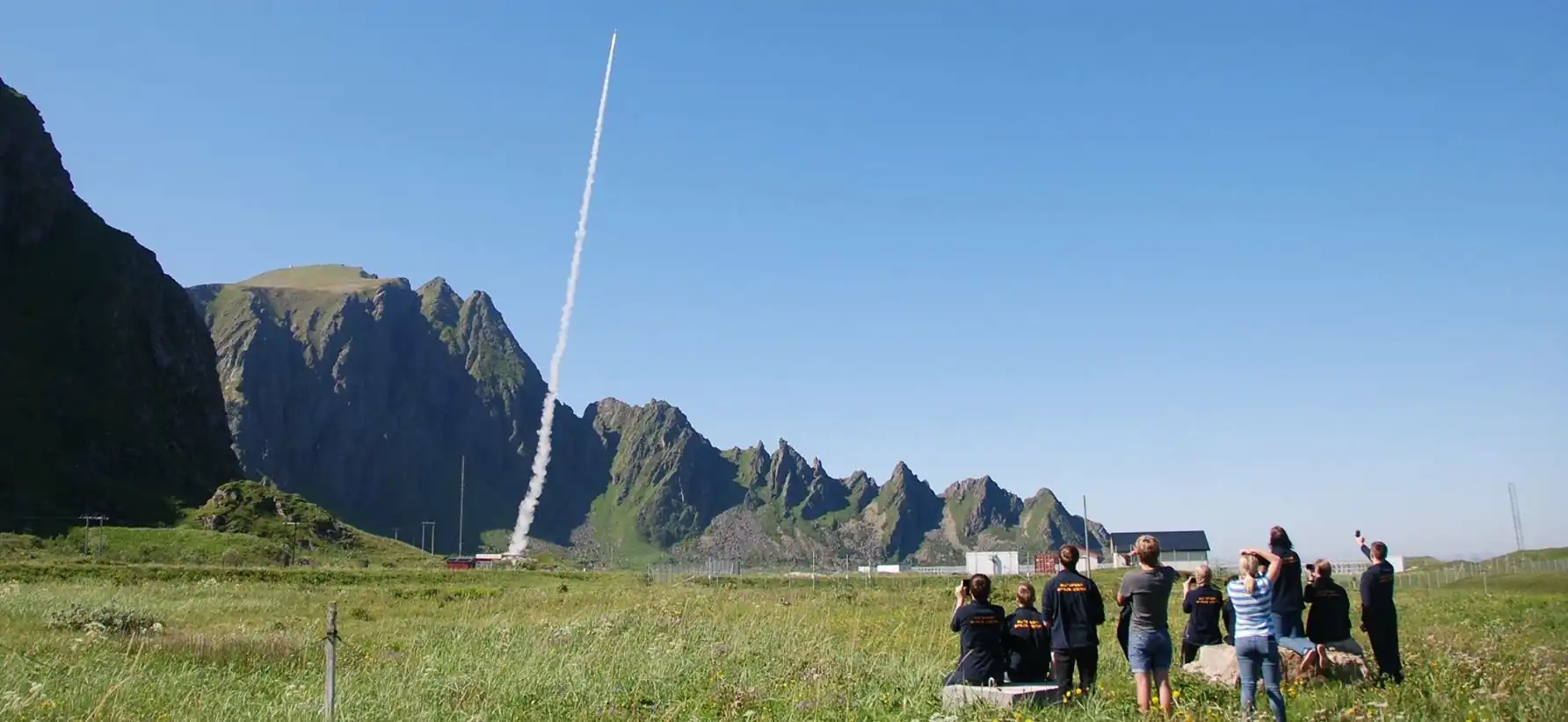

European Space Camp is a one-of-a-kind summer programme held at Andøya Space in Northern Norway, where 24 students come together to design, build, and launch a real sounding rocket. Over the course of a week, participants dive deep into rocket physics, flight modelling, telemetry, and payload construction—gaining practical experience rarely accessible to students at this age. Beyond the labs, the camp offers unforgettable moments: swimming under the midnight sun, hiking to the ALOMAR research station, and bonding with peers from across the globe.
Applicants should have a strong interest in science, particularly physics and space-related topics, and possess a high school–level background in physics and mathematics. The camp is not open to university students already studying engineering or physics. Since all activities are conducted in English, fluency in the language is essential for participation.
At European Space Camp, the academic programme is centred around a real rocket launch campaign, giving students hands-on experience in fields like payload design, telemetry, flight modelling, and sensor experiments. Expert-led lectures from top European scientists deepen understanding in physics, engineering, and atmospheric science, while teamwork in specialised groups ensures students apply their learning in a practical, collaborative environment.
Beyond the labs and lectures, European Space Camp offers unforgettable Arctic adventures—from hiking to the ALOMAR research station to swimming under the midnight sun and relaxing in a traditional sauna. Social activities like volleyball, team challenges, and shared downtime in the game room help forge lasting friendships in a truly unique setting.
Participants stay in comfortable double rooms at the on-site Andøya Space Center hotel, each with an en-suite bathroom, WiFi, and provided linens. All meals are served in the Space Center cafeteria, with dietary needs accommodated, and students have access to recreational spaces including a sauna, games room, and dedicated working areas.


An immersive 4-week summer program in Bali blending sustainable tropical architecture, hands-on design, and cultural exploration for students and professionals alike.


Explore the future of space innovation through hands-on projects, expert mentoring, and outdoor adventure at Cyprus’s CASSINI Space Camp in the Troodos Mountains.


Live and learn on a remote island while exploring marine science through hands-on research, labs, and ocean adventures.

The Leadership and Social Innovation program at Leysin American School (LAS) in Switzerland combines intensive language courses with a unique focus on leadership and environmental sustainability, offering students a blend of academic rigor and outdoor adventure.


Ambios offers immersive nature recovery training at Lower Sharpham Farm in Totnes, Devon. Our programmes provide hands-on experience in ecology, rewilding, and sustainable farming. These courses are designed for individuals seeking to enter or advance in the environmental sector.


Empower. Explore. Innovate. Gaia Changemakers Program (GCP) is a three-week traveling summer program for motivated students (15-19) passionate about sustainability, leadership, and real-world impact. Held in Switzerland and the Czech Republic, Gaia Changemakers combines hands-on learning, expert mentorship, and global challenges to prepare students for the future. Experience adventure, teamwork, and college-ready leadership skills.


IYMS is a global creative community empowering individuals to learn filmmaking, collaborate with others, and create impactful short films with powerful messages.

 Summer Courses Guide